



Abstract: RFID tag
Keywords: RFID tag
It is said that Heilan Home’s assembly lines and chain stores need to purchase 200 million yuan a year for “clothing network” and automation. There have indeed been rumors about “men’s wardrobe” and chips, and Heilan Home has long clarified that it does not make chips. However, this time it is a real large purchase order for IoT chips.
In the clothing industry, Decathlon, Nike, Adidas, Zara, Uniqlo, Prada, etc. also laid out the “clothing network” ten years ago. The Internet of Things is no longer a high-end concept, and it has already penetrated into our lives.
Uniqlo’s bargain hunting and dressing notes can be collected and covered with dust, but the “black technology” of the tag cannot be ignored. With UHF RFID Hang tags, self-service checkout in stores can also be very elegant. There is no need to scan the barcode one by one. The shopping cart automatically reads the model, price, and quantity of the goods, and you can quickly pay and leave.![DSC03789[1]](https://www.focus-rfid.com/uploads/DSC037891.jpg)
RFID, or radio frequency identification technology, is a masterpiece of the mature development of the contemporary Internet of Things. You can think of it as a “clothing” network. The polo shirt you bought from Jay Chou, from the factory to logistics, retail stores, to when and where you consume it, the whole life cycle is clearly visible.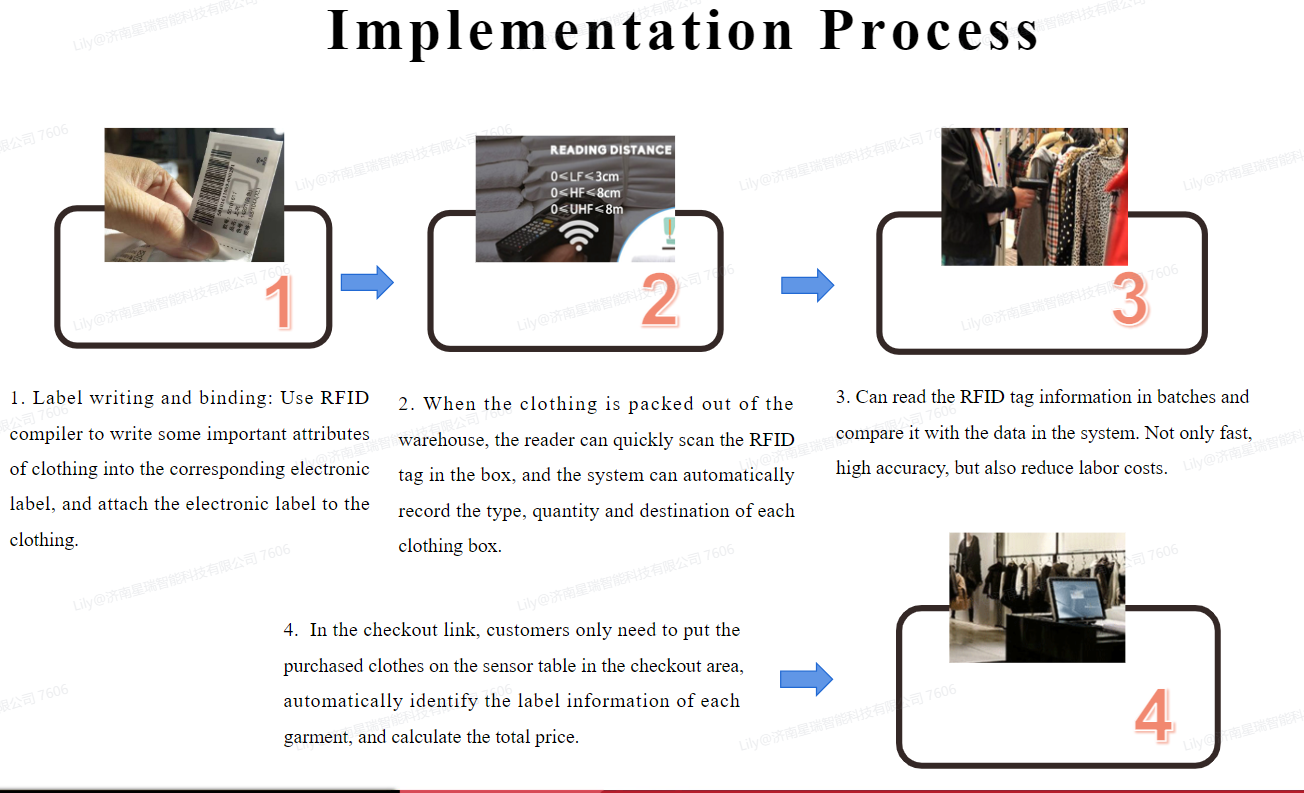
According to data from 2022, Heilan Group sells 200 million pieces of various types of clothing annually. It is not only the leader of Chinese men’s clothing and a man’s wardrobe, but also has various brands of women’s clothing, children’s clothing, etc., and the size of its clothing business is very large. In order to better count and manage these clothes, Heilan Home has started to build an “RFID streamlined reading system” since 2014.
![1361a5d5006f401e92ba4bf2e3cea1e8[1]](https://www.focus-rfid.com/uploads/1361a5d5006f401e92ba4bf2e3cea1e81.jpg)
RFID Streamlined Reading System”, adopts “channel machine” mode, streamlining reading of RFID chip information, batch scanning, real-time uploading, comparison and classification of boxed clothing commodity information
The core of connecting hundreds of millions of clothing sold nationwide is a chip and an antenna carried by each product.
UHF RFID tags are embedded in clothing tags, and RFID chips are written with product number, color number, specification, quantity and other SKU information. Through real-time monitoring of each piece of clothing by the chip, detailed data is collected.
The characteristic of this chip landing is that the amount of consumables is large. When Heilan Home’s “Clothing Network” was officially put into operation in 2015, 80 million labels were ordered for clothing in autumn and winter alone, which is 80 million RFID chips.
According to Heilan Home’s chip According to Impinj, a supplier, RFID can save Heilan Home tens of millions of dollars ($10 million is about RMB 70 million) in expenses each year, save about 250 hours of work per store, store millions of items every day, expand inventory capacity by 5 times, and increase warehouse purchase capacity by 5 times at the same time, with 100% accurate transaction records.
With radio frequency identification technology, in retail stores, staff only need to hold RFID readers to read the information of hundreds of garments on turnover boxes and shelves at a time from a few meters away. The antenna communicates with the reader through radio waves, and the chip can modulate and demodulate radio signals, process and store various data from products, complete inventory within seconds, and the entire process does not require batteries for tags.
Heilan Home is large in size and has a large inventory. Inventory is high. At the end of 2021, Heilan Home had an inventory of 8.12 billion yuan; as of the end of September 2022, Heilan Home’s inventory was as high as 9.055 billion yuan, and the clothing warehouse had a lot to digest. In retail stores, the inventory of a SKU in the inventory center may reach hundreds or thousands of pieces.
Inventory management is a tedious job. In the past, you had to get close to a few centimeters to scan a barcode. Friends who have used supermarket self-service checkouts know that you can only scan one item at a time, and sometimes it will fail. It is complicated and time-consuming. RFID chips can transmit data to multiple readers at the same time, greatly improving the efficiency of inventory management.
In addition, Heilan Home can also analyze when you take the goods, when you put them back on the shelf, which one has good sales, analyze consumer behavior, and further optimize production and sales and destocking.
Hailan Home started to build this clothing tracking production line in 2014. After it was officially put into operation, Hailan Home became the first clothing company in China to apply the Internet of Things radio frequency reading and writing technology on a large scale.
Hailan Home’s factory is also equipped with a heavy machine for RFID identification – the channel machine. This throughput whale can read the information of all the clothing in a standard box every 8 seconds without opening the box, and scan up to 300 pieces at a time.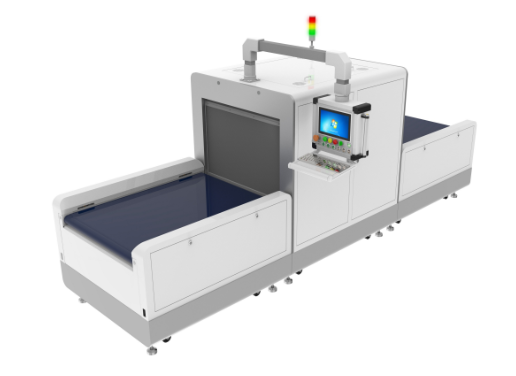
When Hailan Home first started to play with the Internet of Clothing in 2015, there were 10 such “channel machines”, each of which cost about 600,000 yuan. Adding 10 channel machines each year would cost about 6 million yuan. Hailan Home has further expanded its application in the receiving and shipping links. With the laying of digitalization, the cost of these devices is not small.
What “core” opportunities are happening?
To empower traditional industries and applications, consumer Internet of Things such as clothing RFID identification has taken the lead, and RFID technology has taken root in all walks of life and has grown explosively.
It can trace the source and prevent counterfeiting. Whether it is the big brands Prada, Adidas, or the national brand Heilan Home, they strictly control the product quality; the mother and baby RFID identification belts in the hospital greatly reduce the risk of baby theft and wrong holding.
It can relieve the anxiety of waiting. Daxing Airport is the first in China to use RFID to track luggage. Passengers can grasp the dynamics in real time through the app on their mobile phones, alleviating the anxiety of waiting for luggage; on the highway, the RFID reader of ETC automatically identifies and deducts fees when the vehicle is moving quickly, avoiding queues and congestion.
From the perception layer, transmission layer, platform layer to the application layer, sensors to communication chips, radio frequency chips, and finally applied to various hardware and services, this is a long Internet of Things industry chain, involving underlying components to overall solutions.
Sensors are the basis of data collection and are widely used; MCU is the control core of IoT sensor nodes. my country’s MCU development and adaptation for smart home, power IoT, industrial Internet, etc. is growing.
As the core of IoT and the communication chip with the highest technical barriers, with the increase in the number of connections, the connection method is gradually migrating to NB-Iot/4g (cat.1)/5g and other networks, and the demand for NB-Iot, 5G and other standard chips is growing rapidly.
As a part of the city, eating with automated irrigation and “raising 10,000 pigs with only one person” is no longer a dream, living in the city with remote meter reading popularization and maturity, smart wearables, smart homes and other terminal products are in the ascendant, and the largest single IoT market is in operation. The Internet of Vehicles, which integrates vehicle-mounted communications, smart roads, and vehicle-road collaboration, is unstoppable… The relationship between people, objects and machines has never been as close as it is now.
Thousands of companies like NXP, Impinj, Heilan Home, and Uniqlo, which are in the IoT industry chain, are quietly changing our lives.
Post time: Feb-17-2025


