



Against the backdrop of the rapidly evolving modern healthcare industry, the management of medical consumables faces a multitude of challenges—including product diversity, high usage frequency, and difficulties in inventory control. Traditional management models are no longer sufficient to meet the core demands of modern hospitals for efficiency, precision, and safety. In this context, smart shelf technology—centered around RFID readers—is emerging as a “Guardian of Medical Consumables Management.” By leveraging the synergistic interplay between electronic tags and application-specific custom antennas, this technology delivers a revolutionary solution for consumables management, ushering in a new era of intelligent operations.
**Core Advantages of RFID Smart Shelf Technology: A Reader-Centric Collaborative Ecosystem**
1. **Unique Electronic Tag Identification + Precise Reader Interaction:** At the core of the RFID smart shelf system lies the RFID reader, serving as the central node for data exchange. Integrated with electronic tags and application-specific custom antennas, the system utilizes High-Frequency (HF) or Ultra-High-Frequency (UHF) RFID technology to assign a unique electronic tag to every medical consumable (storing critical information such as product name, specifications, manufacturing date, and expiration date). Through real-time data acquisition by the readers, the system enables real-time monitoring, precise localization, intelligent inventory checks, and full lifecycle traceability of consumables—thereby significantly reducing human error while boosting management efficiency and lowering operational costs.
2. **Synergy Among Key Technical Components (Centered on the Reader):**
• **The Reader:** Acting as the system’s “Data Hub,” the reader is responsible for actively engaging in two-way data exchange with the electronic tags. It not only rapidly reads consumable information embedded in the tags and transmits it to the backend management system but also updates tag data in real-time based on management requirements, thereby enabling the dynamic management of consumable information.
• **Application-Specific Custom Antennas:** Serving as the “Communication Bridge” between the reader and the electronic tags—and distinct from generic antennas—these custom antennas are specifically engineered to suit the unique conditions of medical storage environments (e.g., room dimensions, storage density, and potential interference from metal equipment). They ensure the precise transmission and reception of RF signals, effectively eliminating signal blind spots and guaranteeing the stability of communication between the reader and the tags, thereby further optimizing the system’s reading range and accuracy.
• **Electronic Tags:** Functioning as the “Electronic ID Card” for each consumable, these tags store comprehensive product data and possess a unique identifier. When integrated with the reader and custom antennas, they enable the precise identification, dynamic tracking, and information traceability of every single consumable item.
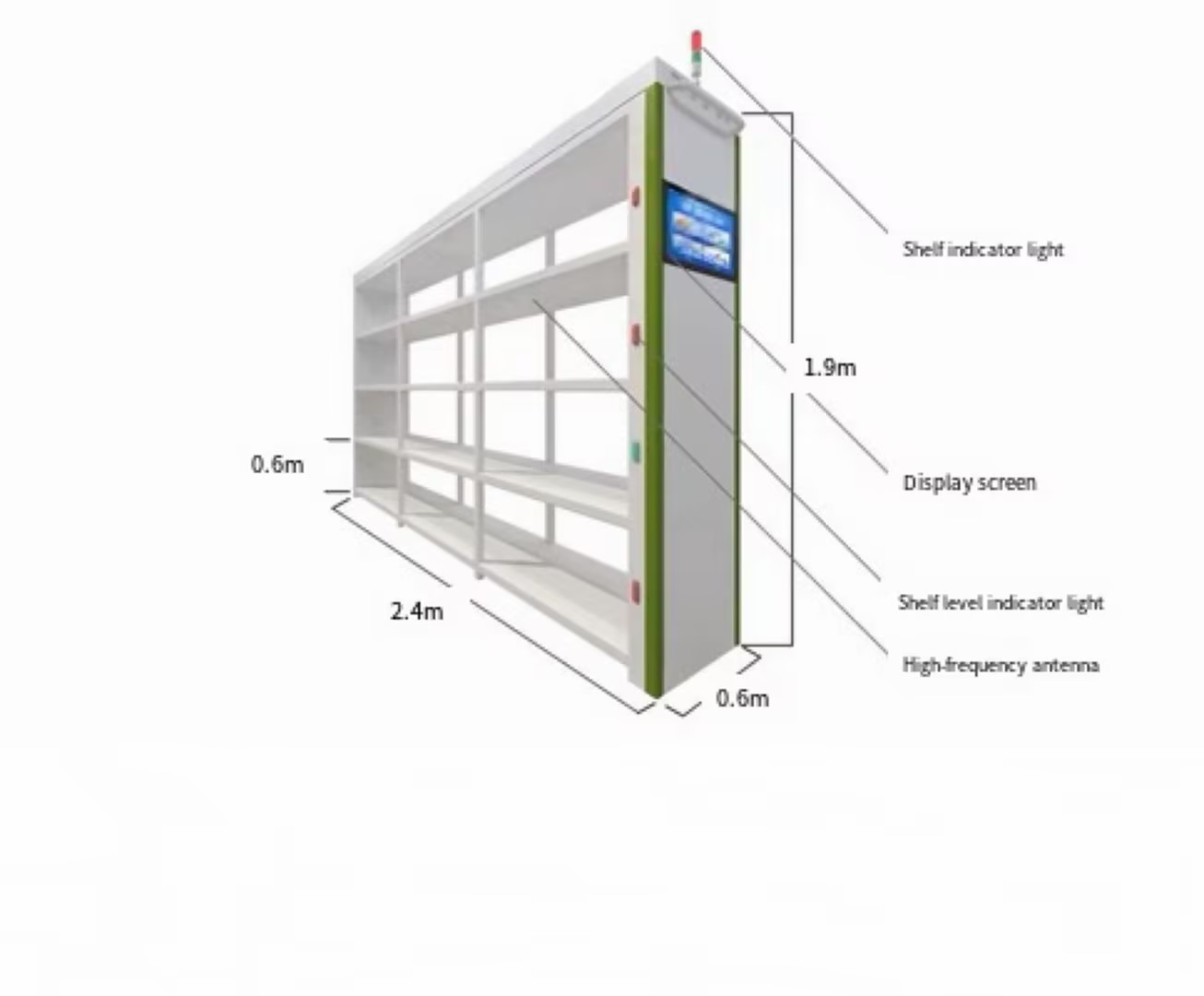
Application Scenarios for Smart Shelves Powered by RFID Readers
1. **Intelligent Inventory Management:** Leveraging the real-time data acquisition capabilities of RFID readers, smart shelves can dynamically scan every consumable item equipped with an electronic tag, automatically updating the inventory database to ensure zero latency and zero errors in information. When inventory levels fall below a safety threshold, the system—based on real-time data collected by the readers—automatically generates a replenishment plan, thereby guaranteeing the continuity of consumable supplies and mitigating the risk of stockouts.
2. **Comprehensive Traceability Management:** Utilizing RFID readers as data acquisition nodes, the system records complete lifecycle information for consumables—from warehousing (where the reader first scans the tag to create a digital record) and storage (where scenario-specific custom antennas ensure real-time monitoring) to issuance (where the reader verifies identity and updates status) and final usage—thereby achieving end-to-end traceability. Should a quality issue arise, historical data can be retrieved via the readers to quickly pinpoint the problematic stage and facilitate the implementation of corrective measures, thereby safeguarding medical safety.
3. **Streamlined Smart Access:** Once medical staff complete identity verification, the RFID reader automatically identifies their authorized access scope, quickly locates the storage position of the required consumables, and triggers smart prompts. During retrieval, the reader simultaneously scans the electronic tags to automatically record usage details and update inventory records; when combined with voice-guided assistance features, this process significantly enhances access efficiency and accuracy while minimizing human operational errors.
4. **Warehouse Layout Optimization:** By deploying RFID readers at multiple points throughout the warehouse—and leveraging the superior signal coverage provided by scenario-specific custom antennas—the system achieves continuous, 24/7 data acquisition, enabling the precise statistical analysis of consumable turnover rates across different zones. Based on this data, the arrangement of shelving and the allocation of storage space can be optimized to maximize warehouse space utilization and reduce storage-related costs.
The Positive Impact of RFID Readers and Associated Technologies on the Healthcare Industry
1. **Significantly Enhanced Management Efficiency:** Centered around RFID readers, an automated system replaces tedious traditional manual tasks such as inventory counting and record-keeping. The system automatically handles data collection, processing, and analysis via the readers, allowing medical staff to devote more energy to clinical work and boosting overall management efficiency by over 50%.
2. **Effective Reduction in Operational Costs:** Precise inventory monitoring enabled by RFID readers minimizes waste resulting from expired, excess, or lost consumables. Combined with the traceability features of electronic tags, the system prevents financial losses caused by the accidental misuse or misselection of items. Furthermore, by formulating rational procurement plans based on real-time data, the technology reduces capital tie-up costs and ensures the efficient utilization of resources.
3. **Comprehensive Assurance of Medical Quality:** The synergy between RFID readers and customized, application-specific antennas ensures that the origin, expiration date, and storage conditions of every consumable item are fully traceable. This effectively mitigates the risks associated with using expired or substandard supplies, reduces the likelihood of medical errors, and enables the delivery of safe and reliable healthcare services to patients.
4. **Scientific and Rational Resource Allocation:** By leveraging consumable usage data collected via RFID readers, the system conducts in-depth analyses of demand patterns across different departments and clinical scenarios. This facilitates the scientific formulation of procurement and inventory distribution plans, preventing both resource idleness and shortages, thereby achieving the optimal allocation of medical resources and supporting the hospital’s transition toward refined, precision-driven operations.
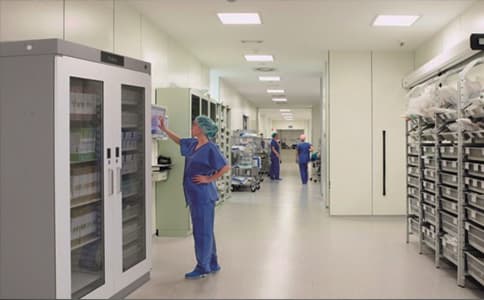
As RFID reader technology continues to evolve and upgrade—accompanied by declining costs for electronic tags and enhanced adaptability of customized antennas—the prospects for this technology’s application in medical consumable management are becoming increasingly vast. In the future, it will further drive the modernization of hospital management models, infuse the healthcare sector with intelligent capabilities, and ultimately lead to the realization of a safer, more efficient healthcare service ecosystem.
Post time: May-26-2026


