



Over the past two decades, the retail industry has undergone a profound technological transformation. From the early EAS anti-theft tags to today’s EPC UHF RFID, this technology has evolved beyond “theft prevention” to become a cornerstone of supply chain digitization and store operation optimization.

From EAS to RFID: From Missing Identity to Digital Identity
EAS tags (RF/AM/EM): Widely used for decades in supermarkets, convenience stores, and apparel shops. They are inexpensive but provide only a simple “present/absent” function, without product-specific identity.
RFID tag: The difference lies in “one item, one code.” Each tag is bound to the SKU and serial number through an EPC code, which not only assists in anti-theft functions but also supports inventory management, tracking, and data analysis.

U.S. Retailers: The Dual-Track Choice
In U.S. retail, RFID is primarily used for inventory and supply chain optimization:
- Suppliers encode EPC into tags before shipping.
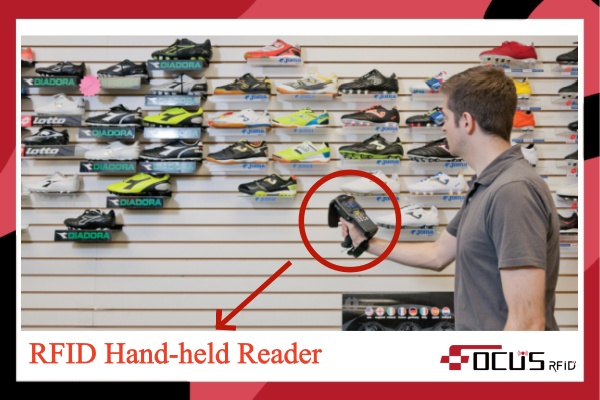
- Stores use RFID hand-held reader for fast inventory counts, replenishment.
- Checkout still relies on barcodes, as existing POS systems and consumer habits are barcode-driven.
This “dual-track” model reduces system upgrade costs but means RFID’s value is concentrated in back-end efficiency rather than front-end customer experience.
UNIQLO: Full-Chain RFID Application
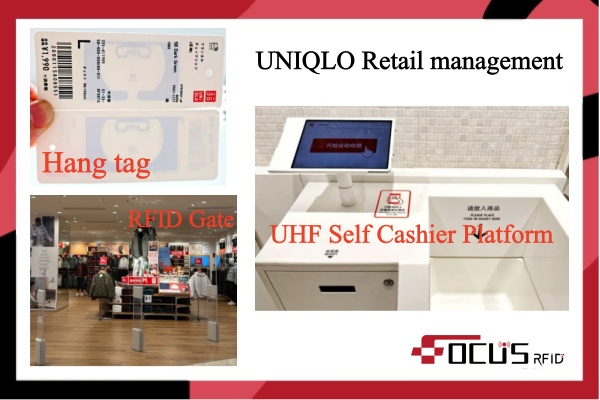
- Each clothing tag embeds an RFID chip.
- Enables tracking across the supply chain and theft prevention in stores.
- Checkout is done directly with RFID scanning frames in one step.
This model fully replaces barcode scanning. Although upfront investment is higher, the gains in checkout efficiency and customer experience make it highly cost-effective in fast fashion.
EAS made products “detectable,” while RFID makes them “identifiable.” Today, it is a key enabler of retail digital transformation. More retailers are promoting dual barcode+RFID labels. In the long run, with the rise of cashierless stores, RFID will integrate with AI, IoT, and blockchain to become the infrastructure of smart retail.
Post time: Sep-22-2025


