



In library management, traditional manual management has been gradually replaced by digital management, using barcode recognition, computer networks and computer software technology to improve management efficiency. However, library management still faces some challenges, such as self-service repayment of books, rapid inventory, search and sorting, which affect the management and service level of the library.
RFID technology can solve these problems!
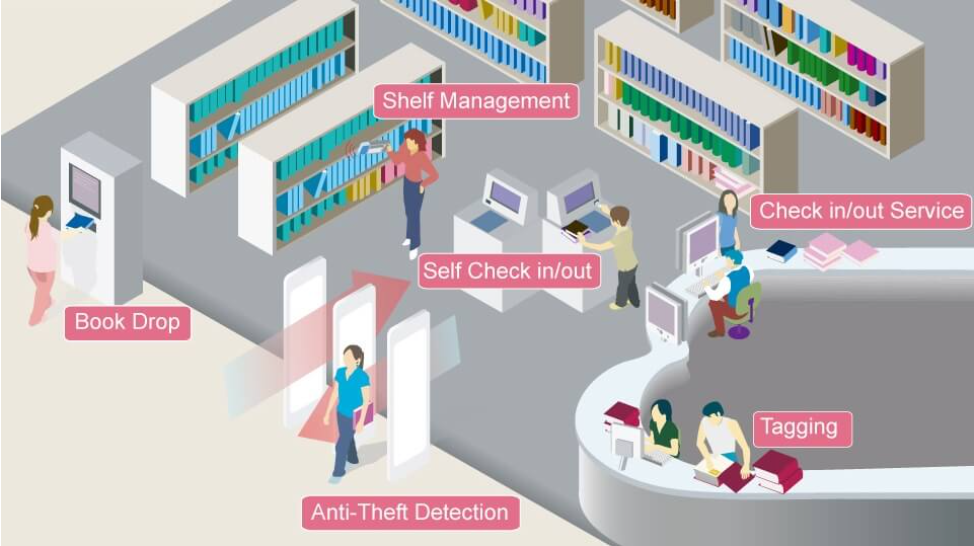
Application of RFID technology in library management
The RFID library system consists of hardware equipment, computer system integration equipment and software. Hardware equipment includes RFID library labels, RFID readers, smart shelves, etc.; computer system integration equipment is used for data exchange and connection; software includes system software and customized R&D software, among which system software includes database intelligent management system, application middleware and text recognition OCR software.
The RFID reader communicates wirelessly with the RFID electronic tag through the antenna, and can read or write the tag’s identification code and memory data. A typical RFID reader includes a high-frequency module (transmitter and receiver), a control unit and a read-write antenna. Compared with barcodes, RFID has the characteristics of batch reading, erasable data and real-time response. Libraries can use RFID technology to achieve various contactless management, including data of readers and collections. In recent years, libraries have used RFID technology to replace barcode recognition, improving operational efficiency and accuracy.
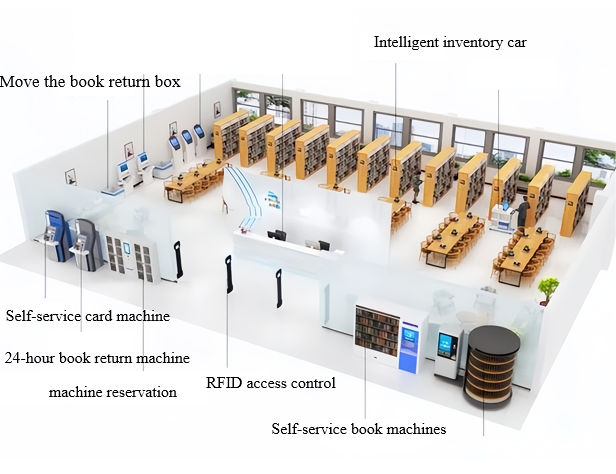
Advantages of RFID technology
1. High-speed identification: RFID technology can identify high-speed moving objects and multiple tags at the same time, and the operation is quick and convenient.
2. Strong anti-interference ability: Short-range radio frequency products are not afraid of harsh environments such as oil stains and dust pollution, and can be used to track objects and other barcodes on factory assembly lines.
3. Long-distance identification: Long-range radio frequency products are mainly used in transportation, and the identification distance can reach tens of meters, such as automatic toll collection or vehicle identity identification.
4. Library management advantages: RFID libraries can realize readers’ self-service borrowing, 24-hour self-service book return, fast collection inventory, fast and accurate database inspection and update, automatic sorting, automatic shelving, data storage encryption and other functions, and improve the level of modern library management.

In short: through the application of RFID technology, libraries can better meet the needs of readers, provide more convenient borrowing services and accurate document location navigation.
Post time: Jun-23-2025


