



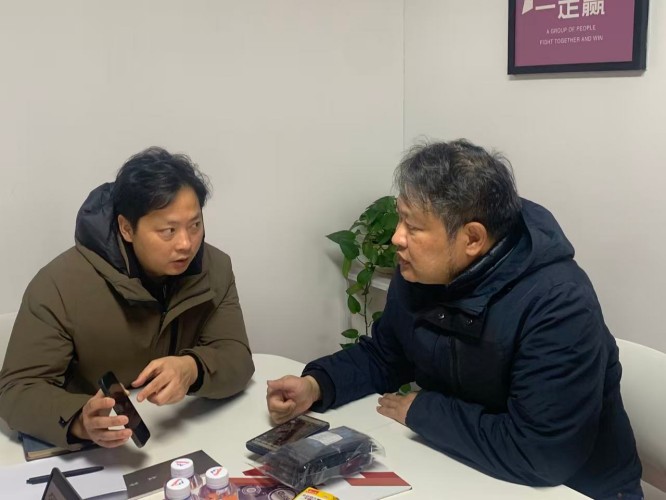
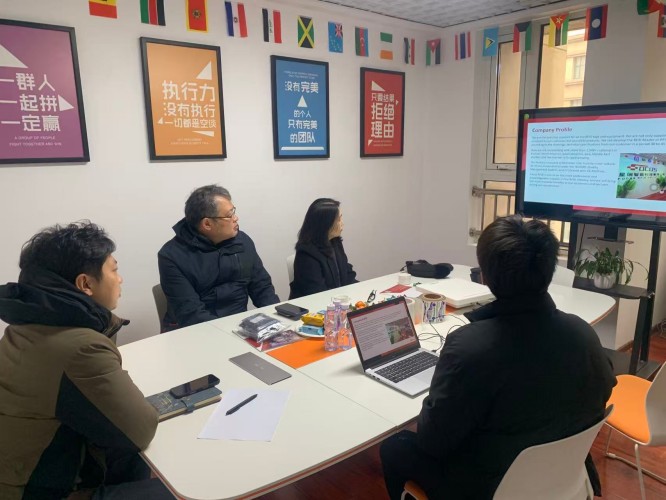
Last Thursday, we warmly received a delegation from Myanmar and held a fruitful full-day technical exchange meeting on an RFID smart fueling control system project that is at the core of their operations. The meeting focused on solving the client’s current challenges in fuel subsidy management and discussed two tailor-made technical implementation paths.

Project Background and Core Requirements
The client operates 48 welfare fuel stations in Myanmar that provide subsidized fuel for cabs and public buses. Due to the lack of effective technical controls, vehicles were illegally refueling and reselling fuel multiple times, resulting in significant financial losses and management risks. The client urgently needs an automated management system that can accurately identify authorized vehicles and strictly enforce daily fueling limits.
Based on our deep understanding of such scenarios, we propose an overall architecture based on RFID technology as the core, combined with the Internet of Things and data platforms, aiming to achieve the three core objectives of accurate identity authentication, mandatory frequency control and centralized data auditing, and to ensure that the system still operates reliably in areas with unstable network conditions.
Two sets of targeted solutions
In view of the diversified site environments of customers (especially the differences in network conditions), we focus on recommending two sets of solutions with their own advantages:
Solution 1: Fixed reader + online real-time decision-making mode
This solution aims at realizing a high degree of automation. Fixed RFID readers are deployed at the entrance of the gas station, and vehicles can be automatically recognized without stopping. Vehicle information is transmitted to the central server in real time through the network, and the server instantly completes the verification of rights and times, and remotely controls the start and stop of the fuel dispenser. The program is highly efficient, centralized and intelligent, but its efficient operation is highly dependent on a stable, continuous network connection, and is most suitable for urban sites with good network infrastructure.
Solution 2: Handheld Terminal + Local Verification Mode
This solution is designed for remote areas with unstable or missing networks. Gas station staff use industrial-grade handheld RFID terminals to actively read vehicle tags. All the verification logic (e.g. whether the refueling limit has been reached on that day) is completed locally in the terminal, and after the verification is passed, the encrypted refueling records can be written directly to the vehicle tag and stored in the terminal. When the network is restored, the data is batch synchronized to the central server. The biggest advantage of this solution is the strong fault tolerance of the network, which realizes “off-network availability and on-network synchronization” with high reliability, but requires manual intervention.
Comprehensive Comparison and Implementation Recommendations
After a comprehensive comparison, we clearly presented to the client the application scenarios of the two options:
Automation and efficiency: Option 1 is significantly better than Option 2.
Environmental adaptability and reliability: In areas with poor network conditions, Option 2 is far superior to Option 1.
Operational complexity and cost: Option 1 has high pre-installation requirements, while Option 2 involves equipment management and labor costs.
Based on the reality that the customer has 48 sites with different distributions and conditions, we strongly recommend adopting the strategy of “hybrid architecture, step-by-step implementation”: adopting Option 1 for sites with good network conditions to create a high-efficiency benchmark; adopting Option 2 for sites with poor network conditions to ensure that there is no dead zone in the control. All data will eventually be converged into a unified management platform to achieve global visualization and management.


Results and Future Prospects
The customer representatives highly recognized the pragmatic and flexible solution combination proposed by our company, especially appreciated the direct effectiveness of Solution 2 in solving the management problems of their remote sites. Both sides reached a preliminary consensus on the next step of pilot site evaluation and detailed program design.
This meeting is not only a technical demonstration, but also a manifestation of our ability to provide customized solutions with a customer-centered approach. We are looking forward to working with our Myanmar client to promote the project and help them improve operational efficiency and management transparency, and establish a fairer and more sustainable welfare fuel supply system
Post time: Feb-02-2026


