



I. Core Concept of the Plan
The integrated smart garment management solution utilizes RFID identification technology to assign unique electronic identifiers to each garment. By deploying smart hardware devices and backend management systems, it establishes an automated closed-loop management system covering the entire lifecycle from inventory storage, distribution, usage, recycling, washing to disposal. The core objective is to replace manual inventory counts with automated data collection and replace manual communication with intelligent system scheduling, significantly reducing error rates, enhancing operational efficiency, and achieving full traceability.
Compared to traditional management methods, the RFID solution achieves a 90% increase in clothing inventory counting efficiency and a 80% reduction in washing handover time, while significantly minimizing counting errors and garment loss caused by manual operations.
II. Core Technology Architecture
The system’s technology involves sewing dedicated RFID washing tags onto each garment. These tags are encapsulated with high-temperature resistant ultra-high frequency (UHF) chip modules and flexible textile fabric, capable of withstanding pressures up to 60 bar, 180°C pre-drying process
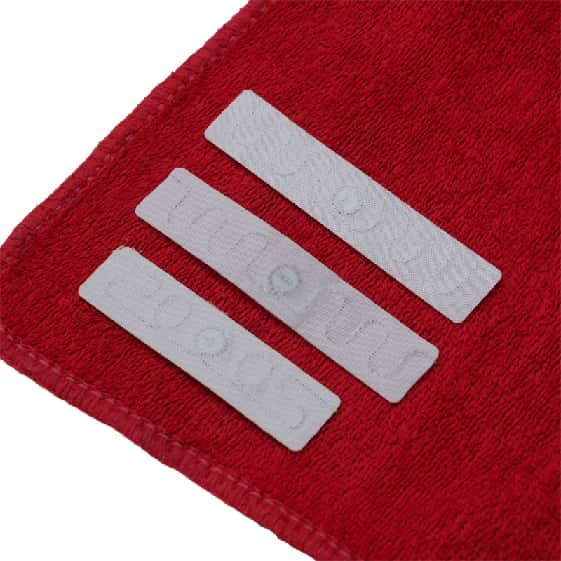
washing cycles. They are designed to meet the frequent and stringent washing and disinfection requirements of hospital garments.
At the equipment deployment level, the system configures three types of reading devices. Fixed readers are primarily deployed at critical nodes such as recycling bins, laundry handover areas, and warehouse entrances/exits to enable automatic batch identification of clothing during entry and exit. Portable readers allow management personnel to conduct flexible inventory counts, handover confirmations, and item location tracking. Smart lockers are installed in patient wards and medical staff corridors to facilitate self-service clothing collection and return. All hardware devices are connected in real-time to the backend management system via network, forming a comprehensive data collection network covering the entire hospital.

III. Full-cycle Management of Clothing
Inventory and identity binding phase
Upon arrival at the linen center, newly procured garments are individually equipped with RFID washing tags by staff through the card issuance workstation. The system assigns a unique code to each tag and records garment category, specifications, department affiliation, or designated user information in the database, thereby establishing digital identity for the garments. Bound garments are stored in intelligent clean wardrobes, with the system automatically updating the total inventory.
Issuance and Usage Phase
For medical staff uniforms, the system deploys smart locker cabinets in wards or changing areas. After healthcare workers complete identity authentication through card swiping, facial recognition, or fingerprint identification, the system automatically identifies their access permissions, permitting the collection of specified quantities and specifications of uniforms while automatically recording the recipient, collection time, and garment details. For general clothing items such as patient gowns, bed sheets, and covers, departments submit requisition requests via the system. After allocation by the uniform distribution center, delivery personnel deliver the items. Upon departmental receipt, batch scanning confirmation is performed via handheld terminals, with the system automatically completing inventory transfer to departmental records.
Usage and Recycling Phase
All departments are equipped with intelligent contamination recovery cabinets. When medical staff dispose of used garments into the recovery cabinet, the integrated fixed reader automatically and seamlessly performs batch recognition of all tag information on the disposed garments. The system records in real-time the types, quantities, and affiliated departments of recovered items. When the recovery volume of a specific garment category reaches a preset threshold, the system automatically generates washing task notifications and pushes them to the laundry center, eliminating the need for manual inspections or telephone communication. This clean-contaminated separation design ensures that contaminated garments enter a closed management channel from the moment they leave the ward area.
Washing transfer stage
When laundry staff collect garments from departments, they use handheld terminals to batch-scan items in recycling cabinets. The system automatically verifies against task orders, completing digital handover procedures that eliminate the cumbersome and dispute-prone nature of traditional manual inventory checks. Upon arrival at the laundry facility, garments undergo secondary batch confirmation via fixed readers, with the system updating their status to “Washing in Progress.” Critical process stages—including sorting, cleaning, drying, folding, and packaging at laundry plants—are monitored through RFID devices for real-time tracking. After disinfection, clean garments pass through reader channels for batch scanning during outbound processing. The system automatically updates their status to “Clean and Ready for Use” and notifies the linen center for storage.
Scrap and Traceability Phase
When garments reach their service life or become irreparable due to damage, the system automatically flags them as scrapped and removes them from the inventory records. Throughout the entire lifecycle management process, the system comprehensively tracks each garment’s complete data including department of requisition, user personnel, recycling date, washing frequency, and scrapping date. Administrators can trace the historical movement of any garment at any time, while leveraging big data analytics to assess overall hospital garment turnover efficiency and wear patterns. These insights provide critical decision-making support for procurement planning and inventory optimization strategies.

IV. Key Scenario Management
Operating Room Clothing Management
The operating room is the area with the highest frequency of surgical gown circulation and most stringent management requirements. The RFID solution deploys smart dispensing cabinets at the operating room entrance, enabling surgical personnel to self-service by completing identity authentication to retrieve standardized surgical gowns, shoes, and caps. Contaminated surgical garments after use are directed into dedicated recycling channels, with automatic system recording. Due to the unique characteristics and high value of surgical garments, the system can also implement a mandatory recycling mechanism to ensure that each retrieved surgical gown must be returned within specified timeframes, significantly reducing surgical gown loss rates.
Management of Medical Staff Uniforms
The uniform management system adopts a hybrid strategy combining dedicated personnel allocation with shared resources. For uniforms requiring individual ownership, the system establishes one-to-one associations between tags and employee records, allowing staff to self-service through smart lockers while maintaining detailed records of every retrieval and return to enable accountability tracking. Shared uniforms are managed through departmental or position-based access controls to ensure equitable distribution. Some hospitals have established 24/7 unmanned uniform management centers where medical staff can self-service clean uniforms anytime, significantly overcoming the time constraints inherent in traditional management models.
General Bedding Management in Ward Areas
By deploying smart clean ward cabinets and contamination recovery units, each ward achieves automated management of the standard eight-piece bed linen set. The system continuously monitors inventory levels of various bed linens across wards, automatically initiating replenishment tasks when stock falls below safety thresholds. Nurses no longer need to conduct daily inventory counts or contact laundry centers via phone calls, as the system seamlessly completes the closed-loop process from usage to restocking. This innovation effectively frees up nurses’ time for clinical duties.

V. Enhanced Infection Control Measures
RFID solutions possess inherent advantages in infection control. The entire process of garment recycling and distribution requires no manual contact-based counting. Contaminated garments undergo no manual sorting per item from being placed into recycling bins until entering washing equipment, effectively reducing the risk of secondary infection caused by counting operations.
The system is designed with mandatory separation of clean and contaminated garments. Clean clothing distribution vehicles are physically isolated from contaminated clothing recycling vehicles, while intelligent clean storage cabinets and contaminated recycling cabinets are deployed in separate areas to prevent cross-contamination. For garments used by patients with infectious diseases or multidrug-resistant bacteria, the system requires mandatory packaging in double-layer dedicated bags during the recycling phase and labels them as infectious textiles. The washing process automatically triggers a dedicated cleaning protocol upon detection.
VI. Management Efficiency and Evaluation
With the implementation of RFID-based intelligent management systems, hospitals can establish quantifiable performance evaluation frameworks. Clothing inventory efficiency has improved by over 90%, while laundry handover time has been reduced by more than 80%. The abnormal wear rate of medical garments has decreased from 5-10% under traditional models to below 2%. The entire handover process now operates paperlessly, with all circulation records automatically archived and 100% signature completeness achieved. Research indicates that IoT-powered smart medical textile management systems can reduce hospital-related costs by approximately 30% annually on average.
The system generates multidimensional statistical reports, including department-specific garment turnover rates, average washing frequency of various garments, and loss trend analysis, providing management with data-driven decision support to optimize inventory structure, achieve precise procurement, and implement staggered distribution.
Post time: Apr-13-2026


