



Abstract: As a key component in the RFID system, the RFID reader antenna plays an important role in smart warehousing. Through the advantages of real-time tracking and positioning, automated inventory counting, improved loading and unloading efficiency, and optimized inventory management, RFID technology has brought revolutionary changes to warehouse management. In the future, with the continuous development of technology and the reduction of costs, RFID technology will be widely used in more fields, bringing greater value to enterprises and promoting the intelligent upgrading of warehouse management. RFID technology is widely used in a variety of automotive-related application scenarios.
Keywords: RFID reader
With the rapid development of Internet of Things technology, RFID (radio frequency identification) technology, as one of the key technologies, is increasingly widely used in the field of smart warehousing. RFID technology uses radio waves for contactless data transmission to achieve automatic identification and tracking of target objects. Among them, the RFID reader antenna is an important part of the system, and its performance directly affects the recognition efficiency, accuracy and coverage of the RFID system. This article will deeply analyze the application of RFID reader antenna in smart warehousing, and explore its technical principles, application advantages and actual cases.

Overview of RFID Technology
RFID technology is a communication technology that uses radio waves for contactless automatic identification and data exchange. It consists of three parts: RFID tags, readers (including antennas) and data processing systems. RFID tags are attached to the objects to be identified and store relevant information about the objects; the readers transmit radio frequency signals through antennas to activate the tags and read the information stored in them, and then transmit them to the data processing system for processing. Compared with traditional identification methods such as barcodes and QR codes, RFID technology has the advantages of batch identification, contactless reading, large data storage capacity, and strong environmental adaptability.

Working principle of RFID reader antenna
RFID reader antenna is a key component for transmitting and receiving radio frequency signals in RFID systems, and its performance directly affects the recognition effect and coverage of the system. The design of RFID antennas needs to consider multiple factors such as frequency, polarization mode, gain, and directivity to ensure effective transmission and reception of signals.
1. Frequency selection
RFID technology uses a wide range of frequencies, including low frequency (LF), high frequency (HF), ultra-high frequency (UHF), etc. Antennas in different frequency bands have different characteristics, such as transmission distance and anti-interference ability. In smart warehousing, ultra-high frequency (UHF) RFID technology is widely used due to its longer reading distance and higher data transmission rate.
2. Polarization mode
The polarization mode of the antenna determines the spatial distribution of its radiated electric field. In RFID systems, common polarization modes are linear polarization and circular polarization. Choosing an appropriate polarization mode can optimize the radiation characteristics of the antenna and improve recognition efficiency.
3. Gain and directivity
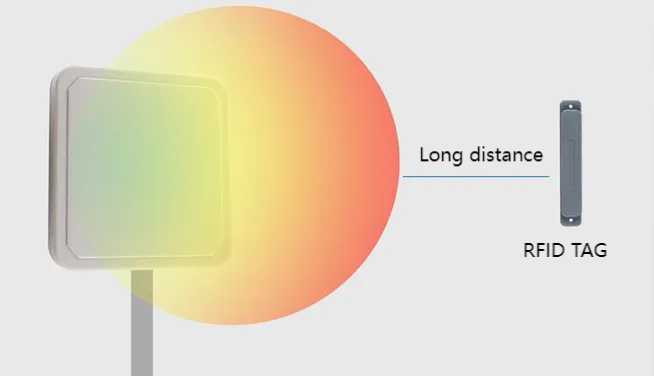
The gain of the antenna reflects the concentration of its radiation energy. The higher the gain, the more concentrated the radiation energy and the longer the reading distance. At the same time, the directivity of the antenna also affects its coverage. In smart warehousing, it is usually necessary to select the appropriate antenna gain and directivity according to the layout of the warehouse and the placement of the goods to achieve the best recognition effect.
Advantages of RFID reader antenna in smart warehousing
1. Real-time tracking and positioning
By attaching RFID tags to the goods and arranging RFID reader antennas in the warehouse, real-time tracking and positioning of the goods can be achieved. RFID reader antennas can read tag information at a long distance and penetrate, and can update inventory data in real time without human intervention, greatly improving the accuracy and efficiency of inventory management.
2. Automated inventory counting
Traditional inventory counting requires a lot of manpower and time, and is prone to errors. After adopting RFID technology, the inventory of the entire warehouse can be quickly completed through a handheld RFID reader or a fixed RFID reader antenna. RFID technology can identify multiple tags at the same time, greatly improving the speed and accuracy of inventory counting and reducing labor costs.
3. Improve loading and unloading efficiency
During the loading and unloading process of the warehouse, the RFID reader antenna can quickly identify and confirm the cargo information, avoiding the traditional manual confirmation process. This not only reduces the operation time, but also reduces the risk of human error and improves the efficiency of loading and unloading.
4. Optimize inventory management
RFID technology can monitor the inventory status in real time, including key information such as inventory quantity, location distribution, and shelf life. When the inventory level is lower than the safety stock, the system can automatically issue an early warning to remind the company to replenish the stock in time to avoid the risk of out-of-stock. At the same time, RFID technology can also help companies analyze operating indicators such as inventory turnover and slow-moving products, and provide data support for inventory optimization.
Actual case analysis
E-commerce warehouse management
In the e-commerce industry, with the surge in order volume, the pressure of warehouse management is increasing. An e-commerce giant introduced an automated sorting system based on RFID technology in its logistics center. When the goods are put into storage, the RFID reader antenna automatically scans the label on the goods and enters the goods information into the system. When an order is generated, the system automatically plans the sorting path according to the order information, and guides the sorting robot or automated equipment to find and sort the goods quickly and accurately through RFID technology. This system greatly improves sorting efficiency and accuracy, reduces labor costs, and provides e-commerce companies with faster order processing capabilities.
Manufacturing Material Management
In the manufacturing industry, the storage management of raw materials and semi-finished products is crucial to production efficiency and product quality. A manufacturing company has achieved automated inbound and outbound management by attaching RFID tags to raw materials and semi-finished products and arranging RFID reader antennas in the warehouse. Through RFID technology, enterprises can grasp the location, quantity and status information of materials in real time, improve the accuracy of material tracking and positioning, and reduce errors caused by human operation. At the same time, RFID technology also helps enterprises optimize production processes and improve production efficiency.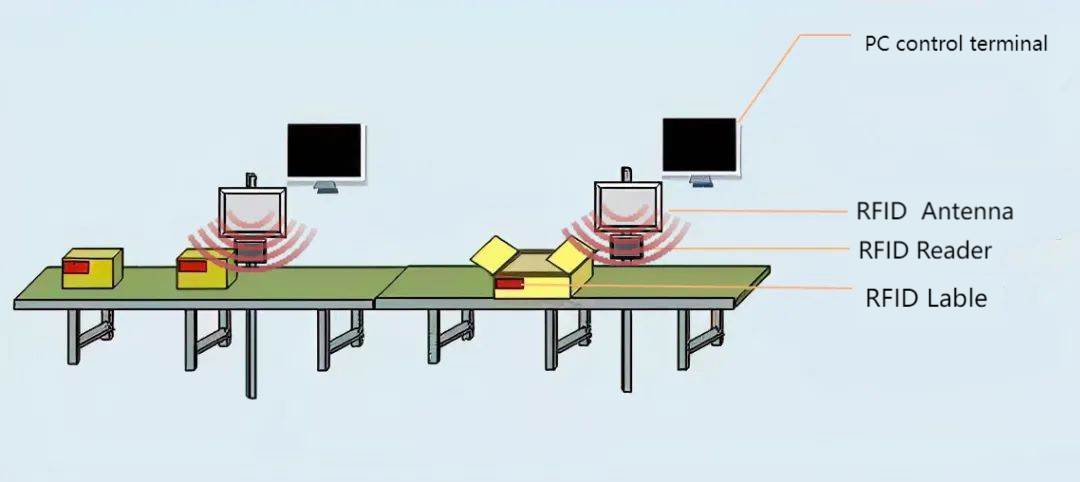
As a key component in the RFID system, RFID reader antenna plays an important role in smart warehousing. Through the advantages of real-time tracking and positioning, automated inventory, improved loading and unloading efficiency, and optimized inventory management, RFID technology has brought revolutionary changes to warehouse management. In the future, with the continuous development of technology and the reduction of costs, RFID technology will be widely used in more fields, bringing greater value to enterprises and promoting the intelligent upgrade of warehouse management.
Post time: Sep-09-2024


