



In the marathon, a sport that challenges the limits of human endurance, accurate timing is not only related to the evaluation of athletes’ performance, but also an important guarantee for the fairness of the event. With the development of science and technology, RFID (radio frequency identification) technology has gradually become the core technology of marathon sports timing with its unique advantages, bringing unprecedented accuracy and efficiency to the event.
1. RFID technology principle
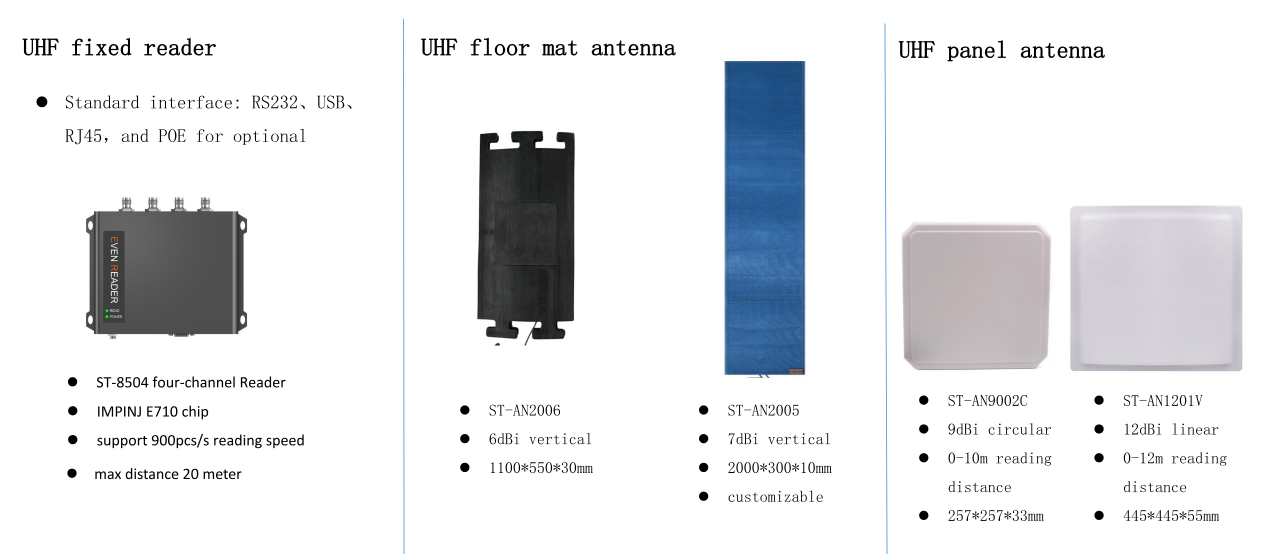
The RFID timing system is mainly composed of RFID tags, readers and antennas.
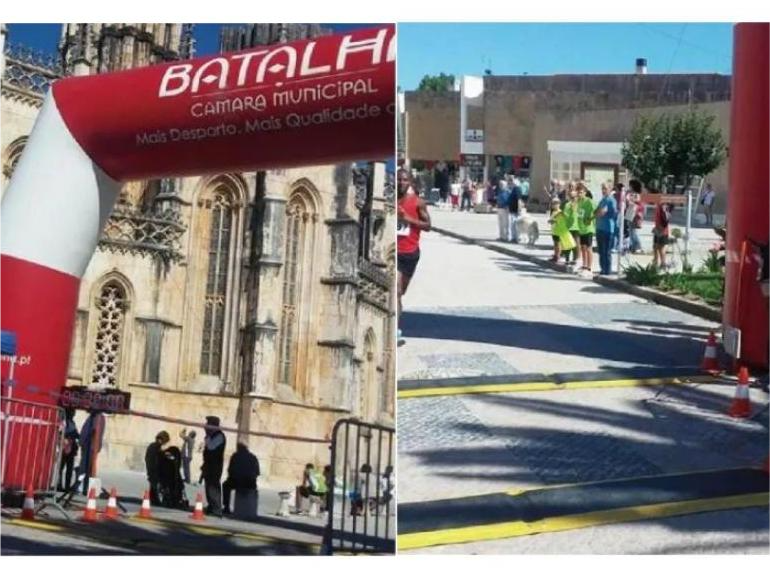
In the marathon timing application, contestants will wear special RFID tags (usually embedded in the number cloth or timing chip). These tags store the unique identity information of the contestants. RFID readers and antennas are set up along the way and at the finish line of the event. When the contestant carries the tag through the reader sensing area, the tag is activated, and data is transmitted through the antenna and the reader. The reader reads the contestant’s identity information and passing time, and transmits the data to the event timing system in real time. This process does not require physical contact, can be completed in an instant, and is not affected by external factors such as light and weather, providing accurate timing services for the contestants.

2. Application of RFID in marathon events
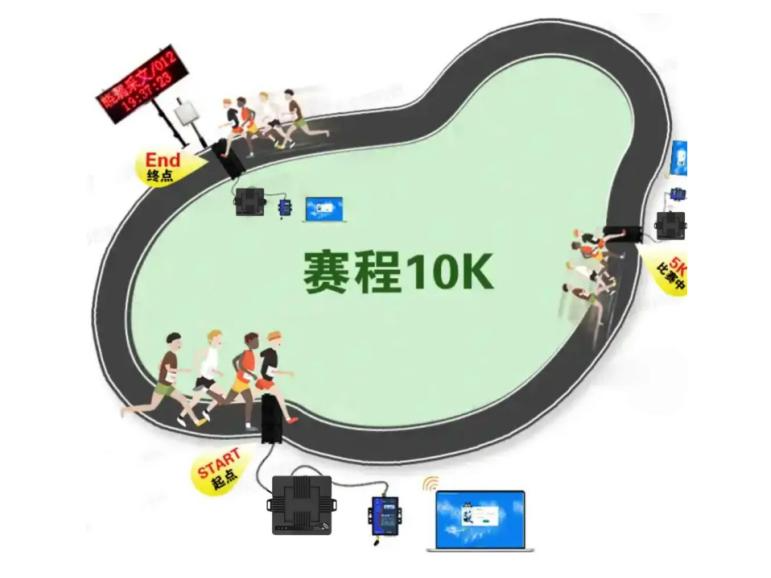
(1) Accurate timing throughout the entire race: From the starting point to the finish line, RFID timing points are set at intervals on the marathon track. When the runner sets out, he passes the RFID reader at the starting point, and the system then records his departure time. During the race, every time the runner passes a timing point, the reader reads the tag information and records the passing time. When the runner reaches the finish line, the tag is read again, and the system calculates the time difference between each timing point to obtain the runner’s net score.
This full-course tracking and timing method can accurately record every key node of the runner on the track, avoiding the problems of omissions and errors that may occur in traditional manual timing. For example, in large-scale international marathon events, even if tens of thousands of runners participate at the same time, RFID technology can accurately record the results of each runner.
(2) Segment results statistics: RFID technology can not only calculate the runner’s full-course results, but also realize segment results statistics.
By setting timing points at different locations on the track, the system can obtain the time taken by the runner in each segment. This is of great significance for the players to analyze their own performance and adjust their competition strategies, and it also allows the audience to more clearly understand the performance of the players at different stages. For example, the organizer of the event can use the segmented performance data to analyze the speed changes of the players in the climbing section and the flat section, and provide the players with personalized competition analysis reports.
(3) Anti-cheating and ensuring fairness: In marathon events, preventing cheating is crucial. The uniqueness and non-replicability of RFID tags provide a strong guarantee for the fairness of the event. Each runner’s tag is bound to his or her identity, and during the event, the tag must pass through each timing point as required, otherwise the result will be invalid. This method effectively eliminates cheating such as running for others and taking shortcuts, ensuring the fairness of the event.
3. Changes brought by RFID to marathon events
(1) Improving the professionalism of events: The precise timing system makes marathon events more professional and authoritative, attracting more high-level athletes to participate, and improving the overall competitiveness and influence of the events. At the same time, detailed performance data also provides event organizers with rich post-race analysis materials, which helps to continuously optimize event organization and services.
(2) Enhancing the audience experience: Real-time and accurate performance reports allow the audience to understand the athletes’ competition situation in a timely manner, increasing the tension and viewing experience of the event. Through the live broadcast of the event and the official platform, the audience can view the athletes’ segmented results, ranking changes and other information in real time, as if they were in the fierce competition scene.
(3) Promoting the intelligent development of events: The application of RFID technology is an important step for marathon events to move towards intelligence. In the future, with the continuous advancement of technology, RFID technology is expected to be deeply integrated with technologies such as big data and artificial intelligence, bringing more innovative services to marathon events, such as personalized training suggestions for athletes and optimization of event routes based on performance data.
The emergence of RFID technology has brought revolutionary changes to marathon timing. With its characteristics of accuracy, efficiency and fairness, it has become an indispensable technical support for modern marathon events, and has promoted the development of marathon sports to a higher level.
Post time: Jul-07-2025


