



Abstract: As numerous livestock enterprises across the country undergo large-scale transformation, “data fragmentation” and “management inefficiency” stand as the industry’s core bottlenecks. Ultra-high-frequency (UHF) animal ear tags serve as the key to resolving this dilemma, providing critical support for the digital transformation of the livestock sector.
I. The Core Dilemmas Facing the Livestock Industry Today
The livestock industry is currently grappling with three prominent challenges: First, soaring costs—according to industry data, while the workforce in the livestock sector has shrunk by 20% since 2010, labor costs have surged by 80%, with personnel expenses now accounting for 25% of total costs, up from 15%. Second, lagging disease prevention and control—under traditional models, tracing the source of an outbreak can take several days, often causing operators to miss the critical window for effective containment. Third, a lack of comprehensive quality traceability—most farms lack end-to-end data recording systems, making it difficult to meet the market’s stringent demands for food safety; this constitutes a core pain point for the majority of large-scale livestock operations.
II. Ultra-High Frequency (UHF) Ear Tags: A Digital Tool for Solving the Crisis
Ultra-High Frequency (UHF) animal ear tags (operating at 860–960 MHz)—leveraging their advantages of long-range identification (1–6 meters), high-speed batch reading (50+ tags per second), and large-capacity data storage (128 bits, read/write enabled)—can be integrated across the entire livestock production lifecycle to precisely address the industry’s pain points:
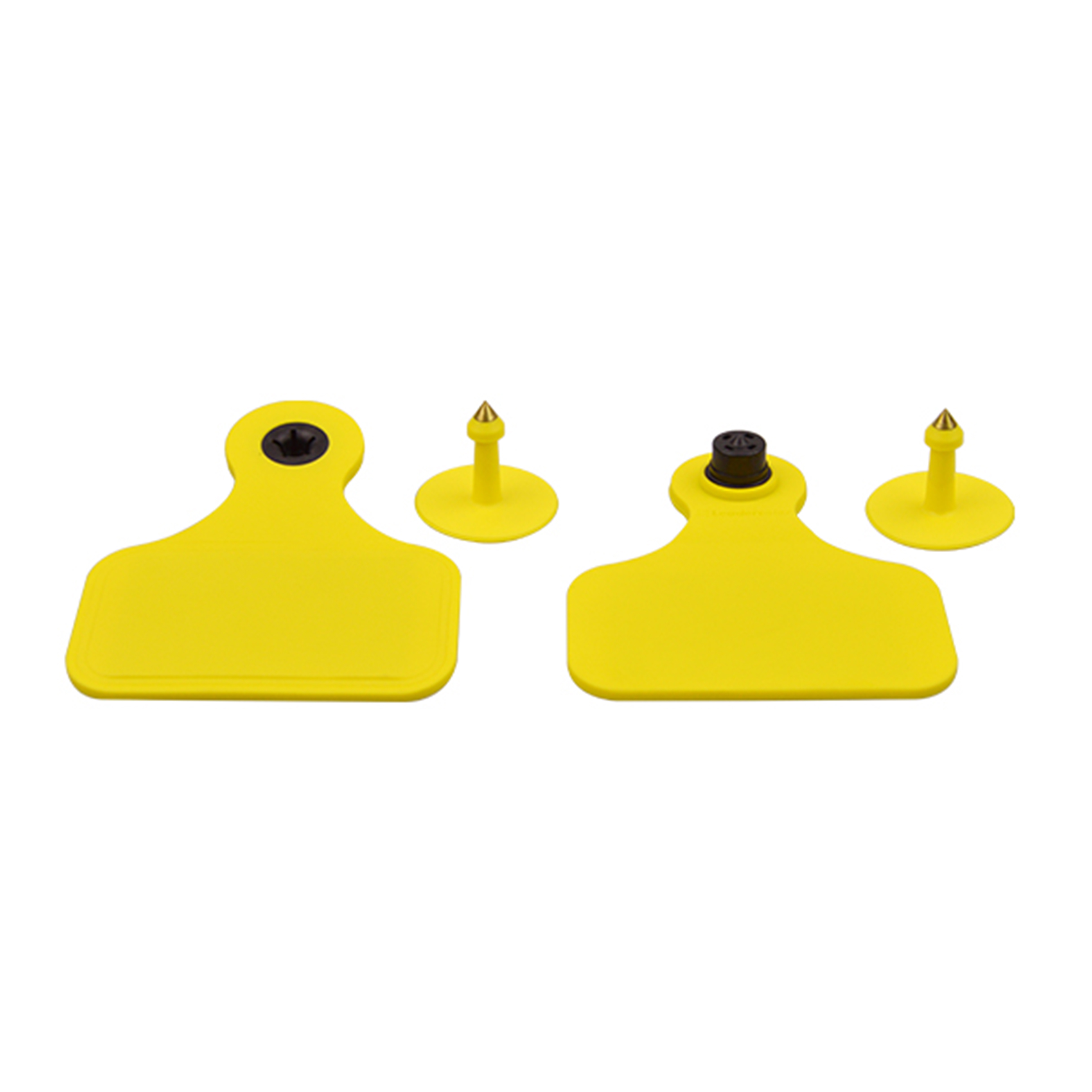
In terms of *precision farming*, following the implementation of this technology at a sheep breeding base in Hulunbuir, Inner Mongolia, the system automatically recorded data on the flock’s feed intake and body weight. By utilizing AI to generate personalized feeding plans, the facility achieved a 12% increase in feed utilization efficiency and shortened the time-to-market (finishing cycle) by seven days. Regarding *disease prevention and control*, in 2025, a dairy farm in Henan Province utilized this system to complete a traceability screening of 5,000 dairy cows within just 30 minutes, enabling the precise isolation of infected animals. Data from the Ministry of Agriculture and Rural Affairs indicates that farms employing electronic ear tags experience an 80% improvement in outbreak response efficiency and a 65% reduction in economic losses. As for *quality traceability*, practical application in the Ewenk Autonomous Banner has demonstrated that a robust traceability system can command a 15% price premium for mutton products and boost sales volume by 20%, thereby significantly enhancing product competitiveness. III. Procurement Guide: Selection Criteria for UHF Animal Ear Tags
Drawing upon our 10 years of industry experience, we have summarized four core selection criteria to help buyers avoid common pitfalls:
1. Chip Performance:Prioritize chips that comply with the ISO 18000-6C standard—specifically the ALIEN HIGGS-3 or MONZA R6—featuring a read/write cycle life of ≥100,000 times and data retention of ≥10 years. 2. **Material and Craftsmanship:** Opt for TPU or PPS materials with a tensile strength of ≥280N and an IP68 waterproof rating, capable of withstanding animal biting and harsh environmental conditions. 3. **Application Scenarios:** Select large-format tags (100×75mm) for cattle, smaller tags (45×65mm) for sheep, and tags with an anti-shedding design specifically for pigs. 4. **Integrated Services:** Prioritize suppliers offering a comprehensive, integrated solution—encompassing “ear tags + readers/writers + management platform”—to avoid device incompatibility issues; an excellent example is the complete solution provided by Henan Lingrui IoT.
IV. The Future: From Simple Identification to Intelligent Upgrades
According to a report by QYResearch, the global market for animal RFID ear tags reached a size of $1.421 billion in 2024 and is projected to reach $1.754 billion by 2031, representing a Compound Annual Growth Rate (CAGR) of 3.1%. UHF ear tags are poised to evolve in three key directions: **Perception Upgrades** (integrating sensors for temperature and heart rate monitoring), **5G Integration** (enabling real-time data transmission from remote pastures), and **Blockchain Empowerment** (ensuring data immutability and integrity).
The Ministry of Agriculture and Rural Affairs has issued a clear mandate requiring that, by the end of 2026, the ear tag monitoring coverage rate for the nation’s three major livestock categories—pigs, beef cattle, and dairy cattle—must reach no less than 85%. Consequently, these tags will transition from being merely “optional equipment” to becoming “essential infrastructure.” Henan Lingrui IoT’s UHF ear tags are already serving over 500 livestock farms nationwide, helping clients achieve an average cost reduction of 20% and a 30% increase in operational efficiency. UHF animal ear tags have long since transcended the role of simple identity markers, becoming the very core of intelligent pasture management. Choosing high-quality products means fortifying the management and security defenses of your livestock farm; Henan Lingrui IoT is committed to leveraging its professional solutions to support the high-quality development of China’s livestock industry.
Post time: May-13-2026


